
Teaching & Learning Home
Teaching & Learning Home
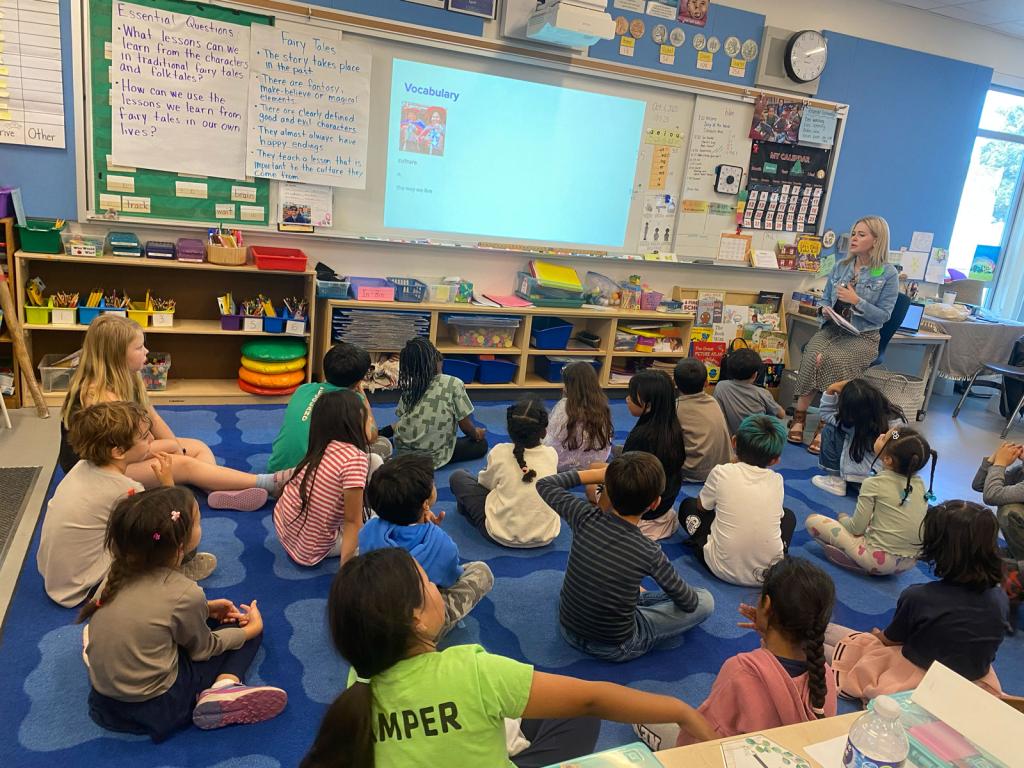
Teaching and Learning leads the work of high-quality instruction across Albany schools. We provide curriculum, professional development, and academic supports that ensure all students engage in rigorous, inclusive, and inspiring learning.
Equitable, Inclusive, & Rigorous Instruction
Every student deserves excellent teaching and learning that affirms identity, removes barriers, and supports growth.
What we are doing:
- Investing in professional growth so every classroom reflects inclusive and effective teaching practices.
- Supporting K-5 teachers to implement What I Need (WIN) Time so that all children receive the targeted instruction and support they need without missing core instructional time
- Supporting Multilingual Learners with dedicated specialists and curriculum
- Adopting new, evidence-based instructional materials and building a common assessment system.
How we will measure success:
- All teacher teams utilize data to inform their instruction.
- Improved student outcomes in reading and math for all students.
- Increased success for students who have historically experienced marginalization
-
Albany’s curriculum focuses on the Common Core State Standards (CCSS) for English Language Arts and Math, and the Next Generation Science Standards (NGSS) for science, ensuring students gain core knowledge and skills for college and careers. Key aspects of implementation include using curriculum frameworks for guidance, engaging in professional development for teachers, and shifting instructional approaches to emphasize deeper understanding, problem-solving, and collaborative learning. These standards define the specific knowledge, concepts, and skills students should acquire at each grade level. The Next Generation Science Standards (NGSS) focus on scientific practices, crosscutting concepts, and disciplinary core ideas.
-
Fishtank ELA
After a yearlong evaluation by our Elementary Literacy Curriculum Adoption Committee during the 2025–2026 school year, we are excited to implement Fishtank ELA across all K–5 classrooms for the 2026–2027 school year. Our teaching staff completed launch training prior to the school year and participates in ongoing professional learning to support implementation.Guiding Principles
- Knowledge & Critical Thinking: Building cumulative background knowledge through rich thematic units.
- Diverse & Rigorous Literature: Exposing students to high-quality, authentic texts.
- Student Voice & Agency: Elevating student ideas through meaningful discussion.
- Writing to Learn: Integrating explicit writing instruction across all content areas.
- Educator Empowerment: Preparing teachers to guide every learner toward success.
Grounded in the Science of Reading
Fishtank ELA directly supports the Language Comprehension side of Scarborough’s Reading Rope. Units focus on developing rich background knowledge, academic vocabulary, complex syntax, and verbal reasoning in order to cultivate strong, thoughtful readers.Phonics Program Adoption
To ensure our K–2 students receive comprehensive, science-of-reading-aligned instruction, we are adopting a structured foundational skills curriculum alongside Fishtank ELA. Implementing a dedicated phonics curriculum ensures we explicitly address the word recognition strands of Scarborough’s Reading Rope and support all students in mastering grade-level standards.Our adoption process began in February 2026, with teachers piloting SIPPS during the Spring and followed by teachers piloting UFLI in the Fall. Final program selection and School Board recommendation for approval will occur in November 2026. Full implementation is targeted for the 2027–2028 school year.
-
Albany Math Vision
AUSD supports all students in cultivating a growth mindset, developing abstract conceptual understanding, and applying their learning to real-world contexts, empowering them to view themselves as mathematically capable participants in their schools and communities throughout their lives.
To realize this vision, AUSD strives to equitably engage every student in hands-on exploration, procedural fluency, real-world problem solving, productive struggle, peer collaboration, and constructing sound mathematical arguments.Current Curricula Overview
Secondary Mathematics (Grades 6–12)
Our middle and high school math instruction utilizes College Preparatory Mathematics (CPM), a research-informed curriculum built around student collaboration, inquiry-based problem solving, and mixed spaced practice.
Core Pillars of CPM- Collaborative Learning Students learn in active study teams with defined roles (e.g., Facilitator, Resource Manager) to discuss strategies, articulate reasoning, and solve complex math challenges together.
- Problem-Based Instruction Lessons introduce concepts through non-routine tasks that spark mathematical reasoning and productive struggle, prioritizing conceptual depth over memorizing repetitive procedures.
- Mixed Spaced Practice Practice sets interleave current lessons with past concepts over time, strengthening long-term retention and helping students make connections across mathematical topics.
K–5 Curriculum Adoption Process
To ensure seamless alignment across all grade levels, AUSD has established a collaborative path forward for evaluating and updating our elementary math programs, which includes plans for a new adoption process.District Math Vision Established
2025–2026 School Year
A district-wide Math Vision Team, composed of teachers and administrators from grades K–12, was established to articulate AUSD's vision for math instruction.K–5 Adoption Committee & Research Phase
2026–2027 School Year
Several members of the Math Vision Team are continuing this work with a specific focus on adopting an aligned K-5 math curriculum. The group is currently evaluating seven high-quality K–5 math programs and conducting comprehensive research: Bridges, Eureka Squared, Illustrative Math, Fishtank Math, Amplify Math, Reveal Math, and Envision Math. By the end of the 2026-2027 school year, the committee aims to select two curricula to pilot the following year.- 2027–2028 School Year: Pilot Program & Adoption Recommendation
- The district will pilot two vetted curricula in elementary classrooms during the school year. Following classroom trials and stakeholder feedback, the committee will formally recommend a single K–5 curriculum by Spring 2028.
- 2028–2029 School Year: District-Wide Implementation
- Full classroom rollout and implementation of the newly adopted K–5 mathematics curriculum begins in August 2028.
- Full classroom rollout and implementation of the newly adopted K–5 mathematics curriculum begins in August 2028.
-
In Albany we administer evidence-based academic screening assessments three times per year for students in kindergarten through 8th grades. Universal Screening is the process of collecting valid and reliable data multiple times a year from all students. This screening provides the data educators need to predict gaps in learning for individual students, classrooms, and grade levels and allow for early access to intervention services that can help students find success. In addition to screening, teachers regularly use diagnostic assessments to identify learning gaps, formative assessments to provide ongoing feedback, and summative assessments to measure overall learning at the end of a unit, course, or learning period. Families can view all screening results for their children though the Aeries Parent Portal. In Albany we use the following universal screeners.
Assessment in Grades K-5:
Literacy: DIBELS*
Math: Fastbridge aMath*Screening for Reading Difficulties: California Education Code Section 53008, mandates all California school districts to annually screen students in kindergarten through second grade for early identification of reading difficulties, including potential dyslexia. In Albany we use DIBELS, one of the screening tools approved by the state for this purpose.
Assessment in Grades 6-8:
STAR Reading and STAR Math
Teaching & Learning Personnel

Karen Schreiner
Executive Director of Teaching & Learning | Albany Unified School District
On unceded xučyun Ohlone land
kschreiner@ausdk12.org
Pronouns: she/her

Michelle Sinclair
District Administrator of State, Federal, & Special Programs | Albany Unified School District
On unceded xučyun Ohlone land
msinclair@ausdk12.org

Dan Gottheiner
Data & Assessment Teacher on Special Assignment (TSA) | Albany Unified School District
On unceded xučyun Ohlone land
dgottheiner@ausdk12.org
Pronouns: he/him